Event planning for nonprofit organizations: steps to success!
Do you need to learn how to plan a great fundraiser? You've come to the right place. Fundraising overall is hard enough, but pairing it with something as complicated as event planning?! Sheesh.
Never fear! We're going to tackle event planning for nonprofit organizations one step at a time.
If you already know what type and size of fundraiser you need to do, I suggest you stick around for this article regardless- it may help you gain clarity on why your event is the way that it is, or perhaps prompt you to change something about the event to hone in on your event's purpose. Ok, let's learn: How to plan a fundraiser.
Start with the money
Your event's fundraising goal is second only to your event's overall goal. For instance, if your overall goal is to "offer high-capacity donors a chance to schmooze and be seen with a world-class over cocktails and live music", then design the event around the schmoozing, but the next most important goal is that you'd like to "raise $100,000". With those two pieces of information, you have a brilliant filter for decisions around building the event.
Maybe your goal is less specific. You need a fundraiser that educates donors on how your nonprofit impacts healthcare, and you'd like to raise more than $10,000. This is wide open for interpretation and there are a hundred perfectly appropriate possibilities for executing. Maybe you organize a 5k and invite healthcare orgs to sponsor a team. Or maybe you host a doctor's breakfast with an educational speaker and the cost of tickets are donated to your organization.
Until you have both your overall goal and money goal determined, do not choose your event format.
Reminder
Your event's overall goal as it is defined in the Nonprofit Event Planning 101 Guide:
A goal for your event that is either physical or emotional, but not connected to numbers of any kind (not money raised, attendance, contacts made, etc.)
Example of an emotion goal: Empower our staff to pull of an event without close supervision.
Example of a physical goal: Give our donors a chance to meet people we serve.
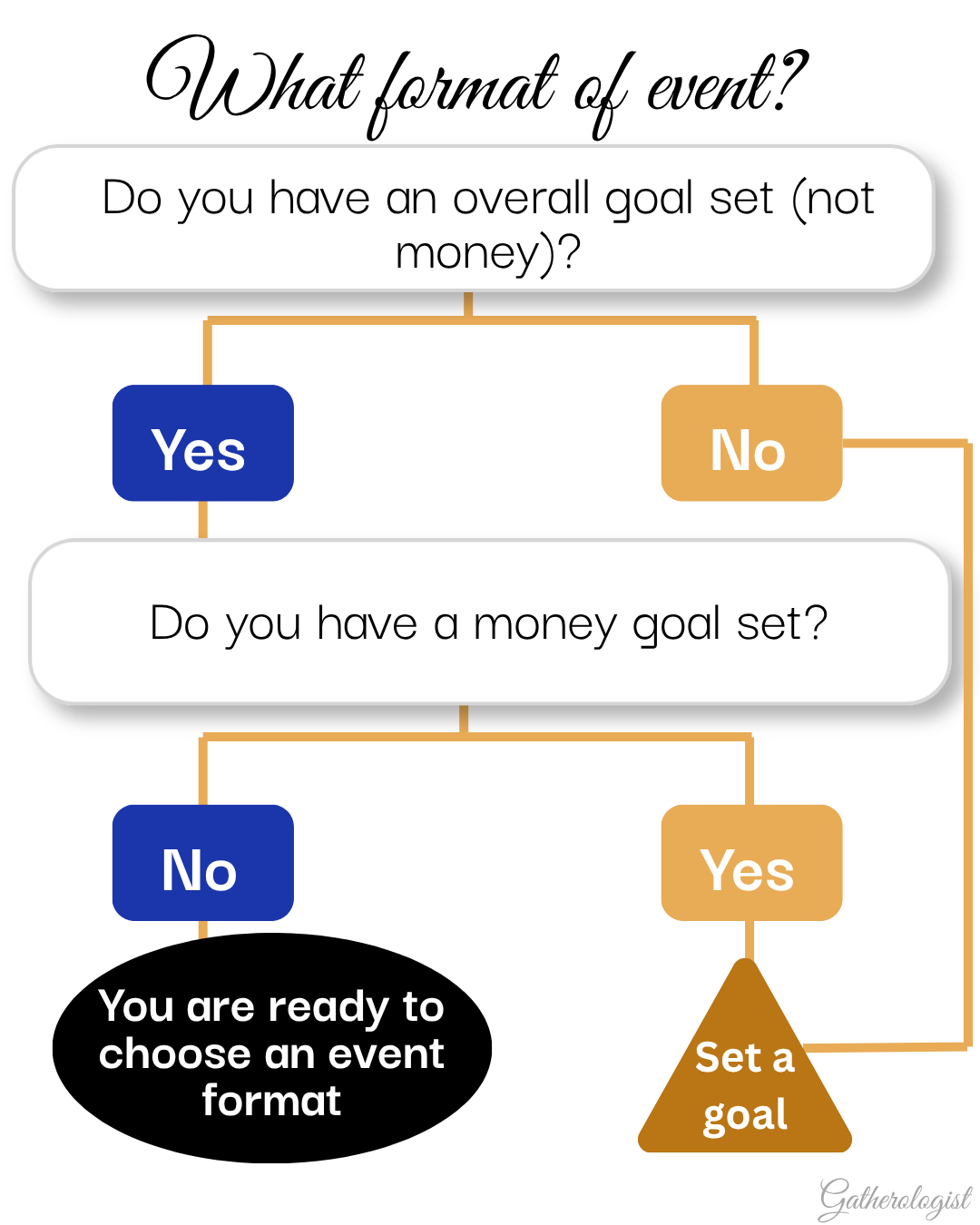
A note about a money goal: Your money goal needs to be for net revenue. Gross revenue can get eaten away by expenses while your net revenue is the number that matters at the end of the day. If you organize a 5k and raise $10,000, but the cost of the event was $4,000, you have only raised $6,000 in net revenue. Make sure the net revenue number is worth the amount of work you put into the event. And make sure the overall goal is worth it, too.
How to Plan a Fundraiser
Now that we have our overall and money goals nailed down, it's time to hone down some of the major choices that will guide our event to success. I promise you, event planning for nonprofit organizations can be done!
As we go, notice something with me - we're not nailing down details like how long the event should be or what venue. We're staying big-picture for now, because doing so will help to clarify the details later on.
There are a few major choices that, if chosen incorrectly, will wreck your event. Study the the chart below and then we'll walk through some examples.
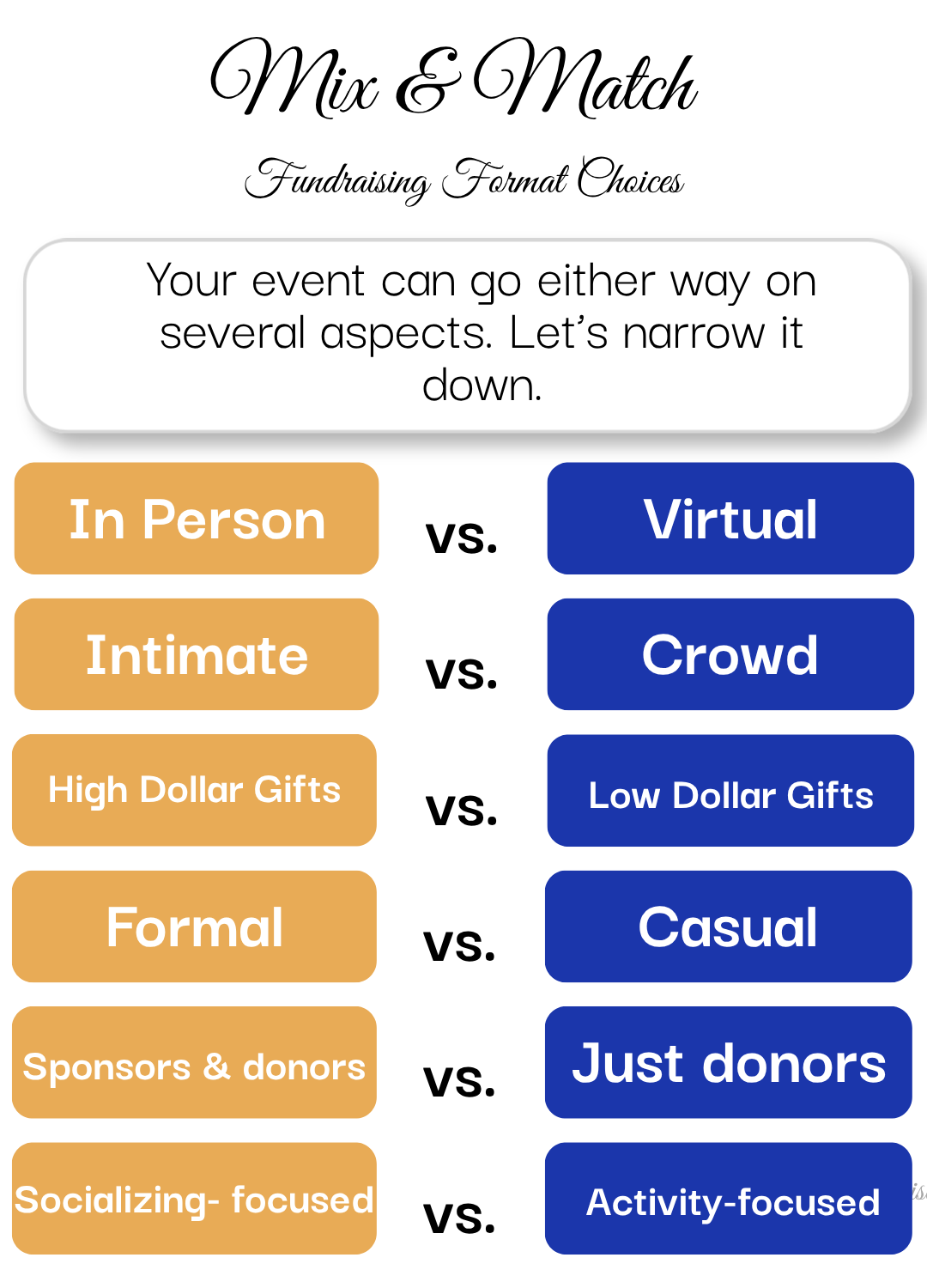
These elements are meant to be mixed and matched. Most events will utilize elements from both columns. All of these are high-level and again, do not get into the weeds yet for details. We're staying at the 30,000-foot view for now. It will help us find the right landing strip later.
How to plan a fundraiser that works is a tricky business. Here are a few examples of some event formats to help expand your thinking:
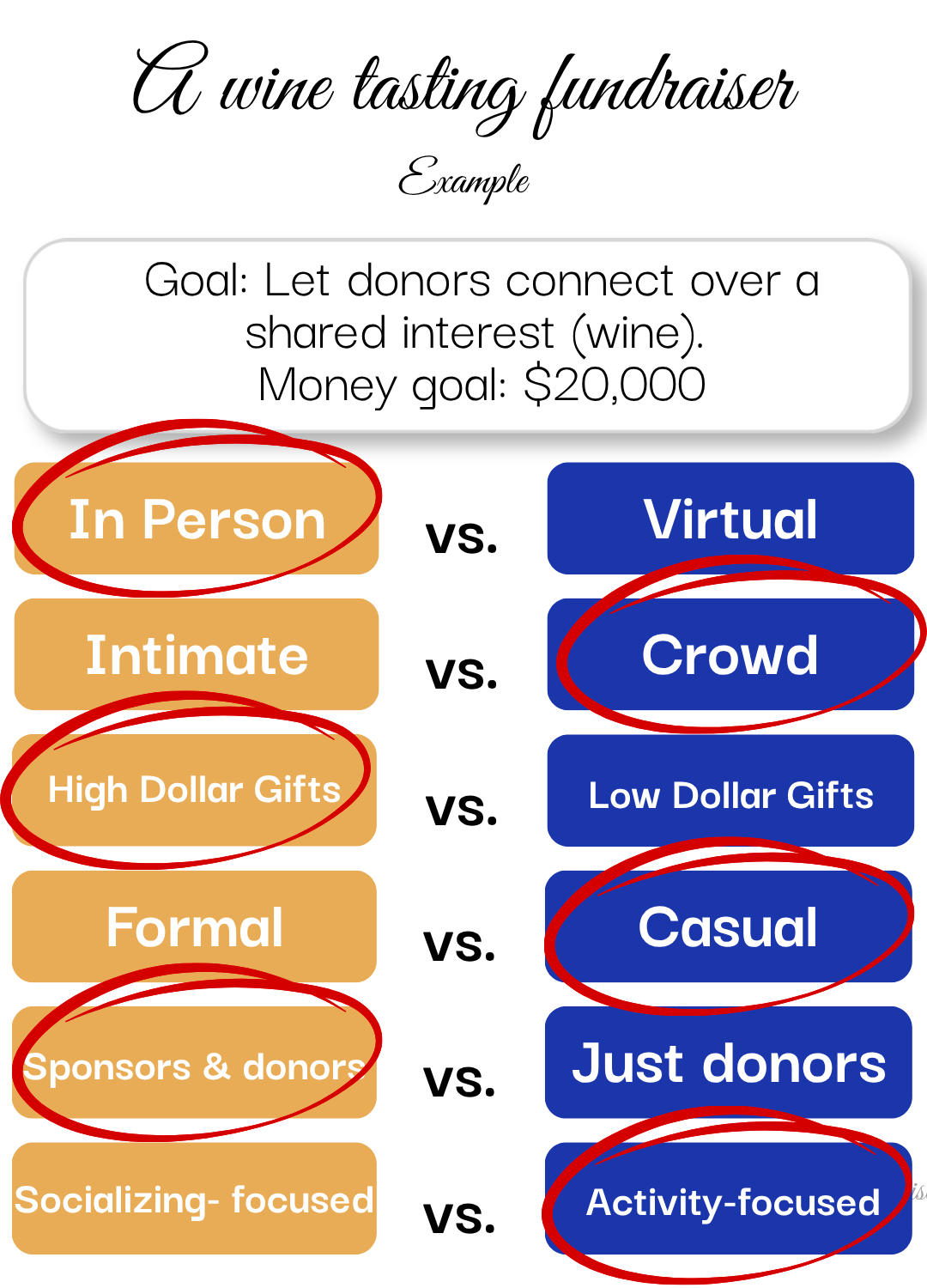
This event will function best with high-dollar gifts to reach that $20,000 mark, but you also want a crowd there so you can make the most of sponsor exposure. The event is activity focused, not socializing focused, because the activity IS the socializing. People are coming together to taste and discuss wine. That is how they will socialize.
Maybe you are hosting a wine tasting just like this one, or maybe yours is better focused on low-dollar gifts or omits sponsors. Each event is unique - don't think that this has all the right answers for a wine tasting event.
Another example:
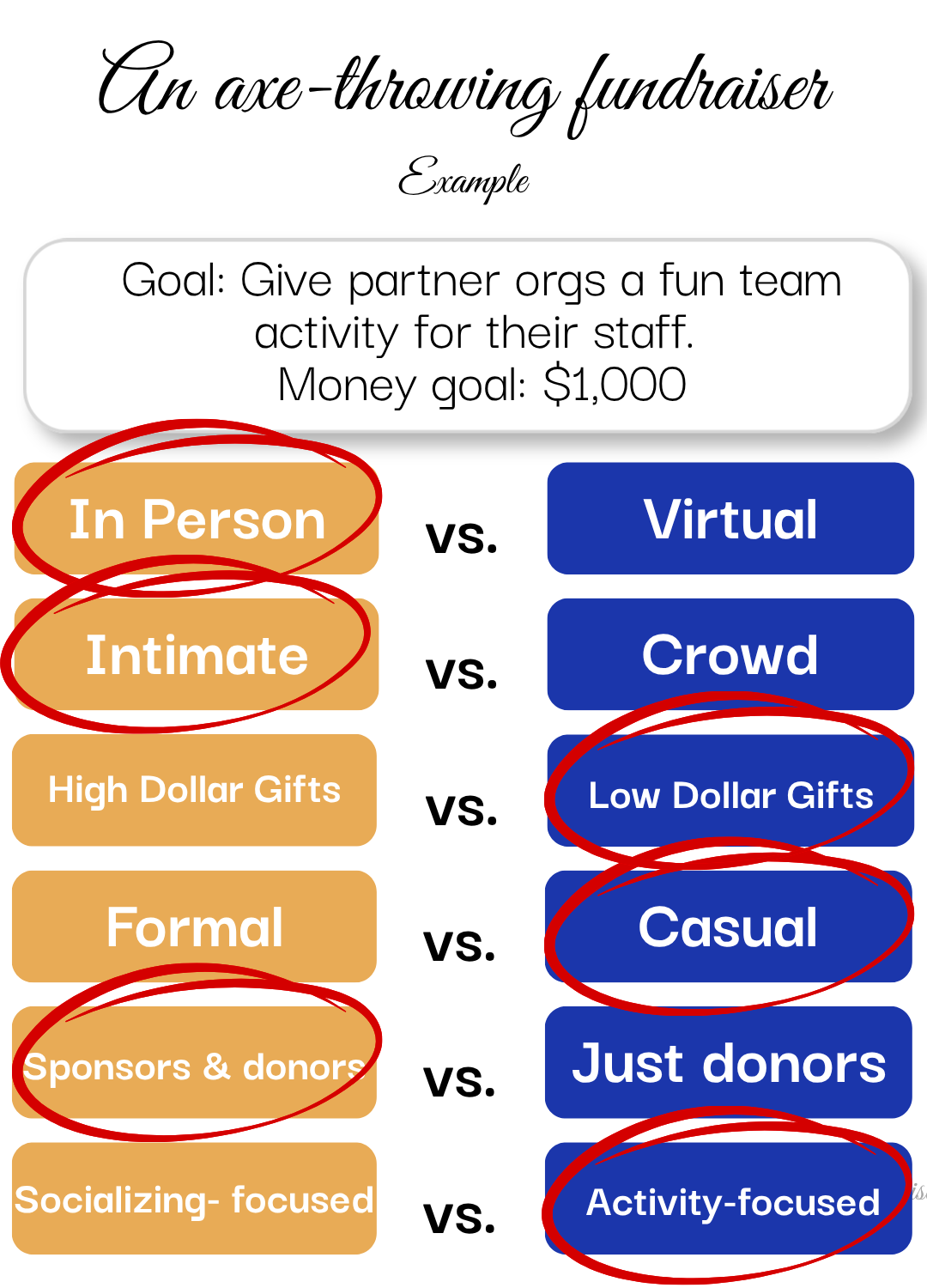
I went to one of these once and it was a blast. They had silent auction items up for bidding, and about 15 teams from partner orgs who brought their staff, donors, and board members out for an evening of reverie, humor, and humility as we hopelessly clanged axes on boards for about two hours. The fundraising goal was low, but that was alright, because the goal of the evening was focused on camaraderie and awareness for the host organization.
One more example:
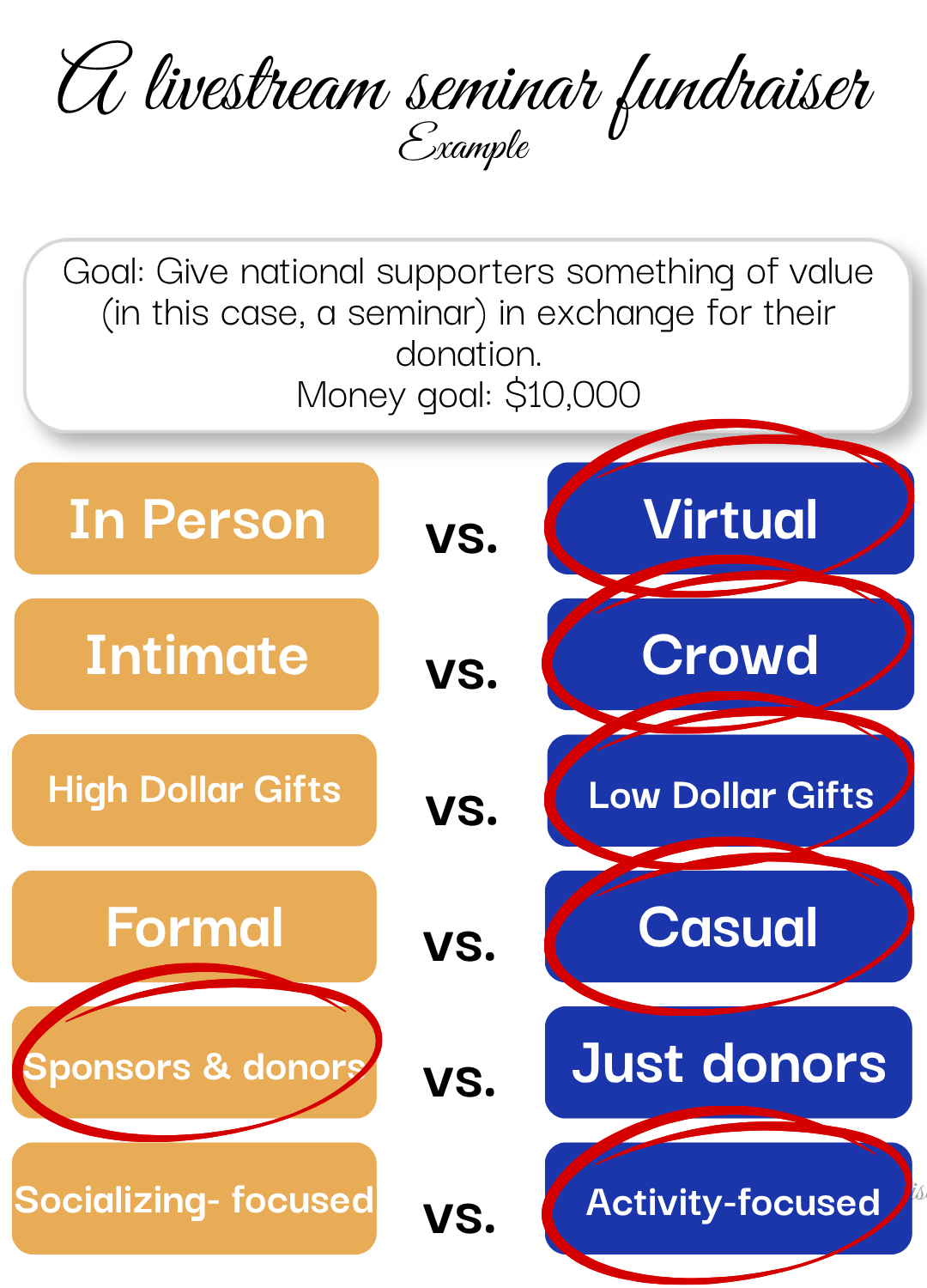
Offering something of value to your donors in exchange for a donation is an excellent way to fundraise. By hosting a seminar (preferably on a topic related to your mission) and selling tickets to benefit your organization, you can raise money without "asking".
If your organization focuses on small business owners being successful, offer a seminar directly to them and hire a speaker who is a small business coach. But if you are focused on the wellbeing of senior citizens, selling virtual tickets to seniors could be problematic.
These are the most important decisions you'll make
There are so many decisions ahead, but they will all be informed by what you choose here, so take your time. Make sure you have it right, because coming back and changing your mind later will cost you precious time. Once you have them all worked out, you can move on to the next phase of planning.
What's next?
In the next few pages, we'll cover budgeting, selecting a venue, and designing the flow of the event. I recommend you walk through these in order, as each one informs the next.
If you are not yet certain what sort of event you'd like to host, check out the fundraising event ideas page.